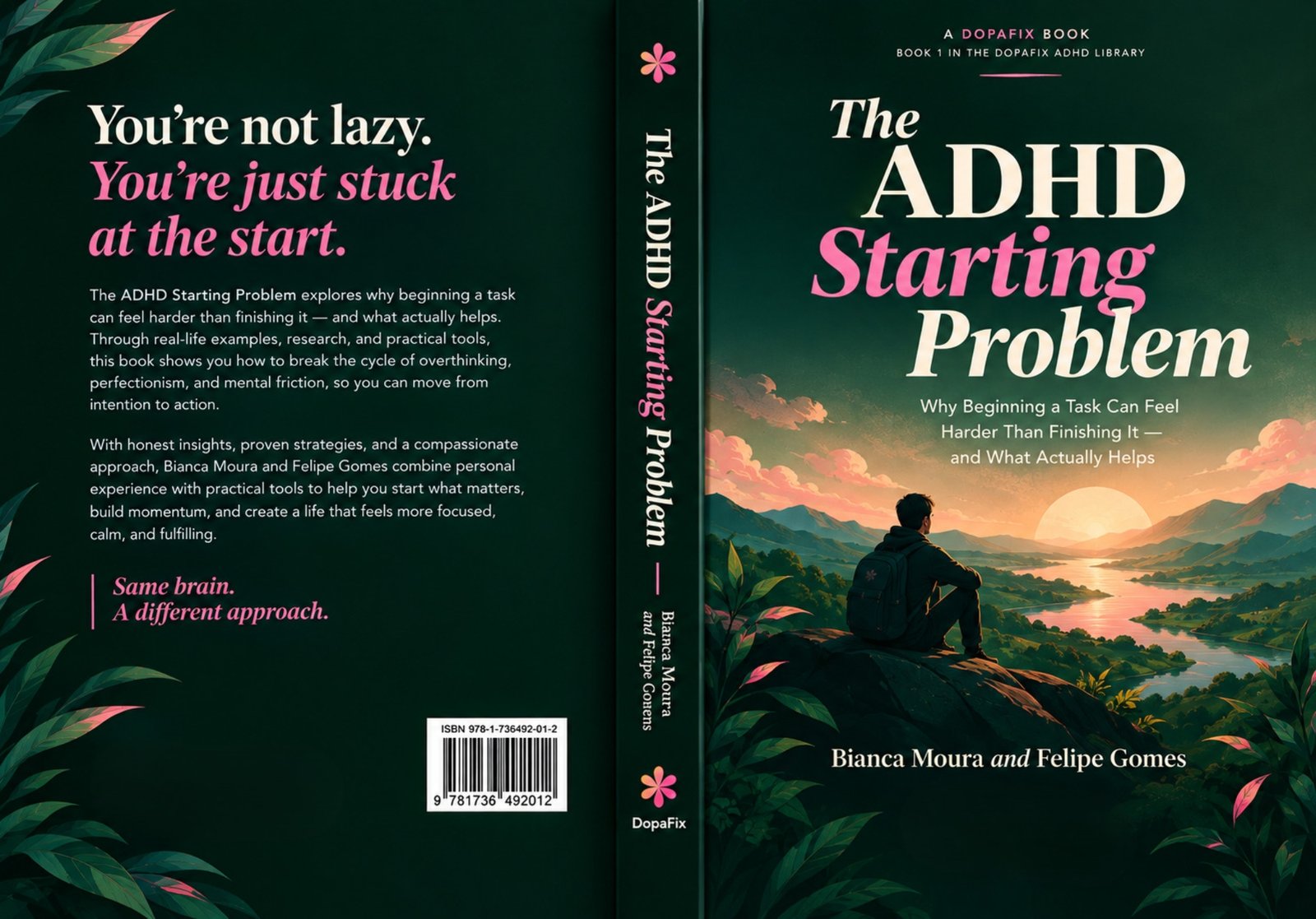
There's a moment, right before any task begins, when everything feels heavier than it actually is. It isn't laziness — it's friction. The brain asks for a bigger initial push than the effort the task will actually require once it's underway.
That friction has a name: the cost of starting. It explains why it's common to spend twenty minutes avoiding a five-minute task.
What's actually happening
When a task hasn't started yet, the brain only has the idea of it — abstract, shapeless. Abstract ideas cost more decision-making energy than actions already in motion. That's why continuing something is almost always easier than starting it.
You don't need more discipline. You need a first action small enough that it doesn't feel like a decision.
A practical way to apply this
Pick the smallest possible action inside the bigger task — opening the document, putting on your shoes, laying out the ingredients. It isn't about finishing; it's about removing the abstraction.
Do that repeatedly, and starting stops being a scary event and becomes just another step, like all the others.